
Last updated: May 18, 2026
Quick Answer: Chronic stress triggers a sustained hormonal response — primarily elevated cortisol and adrenaline — that, over months and years, damages the cardiovascular system, suppresses immune function, disrupts brain chemistry, and raises the risk of serious conditions including heart disease, type 2 diabetes, and depression. The long-term effects of stress on the body are cumulative, often silent, and in some cases partially irreversible without intervention.
Key Takeaways
- Chronic stress keeps cortisol and adrenaline chronically elevated, creating a “wear and tear” effect on nearly every organ system — a concept researchers call “allostatic load.”
- The cardiovascular system is among the most vulnerable: sustained stress raises blood pressure, damages blood vessel walls, and accelerates plaque buildup.
- Long-term stress suppresses immune function, making you more susceptible to infections, slower to heal, and potentially less responsive to vaccines.
- Prolonged cortisol exposure can physically shrink the hippocampus — the brain region central to memory and emotional regulation.
- Stress-driven cortisol spikes increase appetite, promote abdominal fat storage, and contribute to insulin resistance and type 2 diabetes.
- The gut-brain axis means chronic stress also disrupts digestion, contributing to conditions like irritable bowel syndrome (IBS) and acid reflux.
- Unmanaged stress frequently leads to poor coping behaviors (overeating, alcohol, smoking) that compound physical damage.
- The good news: evidence-based interventions — exercise, sleep, therapy, and mindfulness — can measurably reduce cortisol levels and reverse some long-term damage.
What Physiological Changes Occur After Prolonged Chronic Stress?
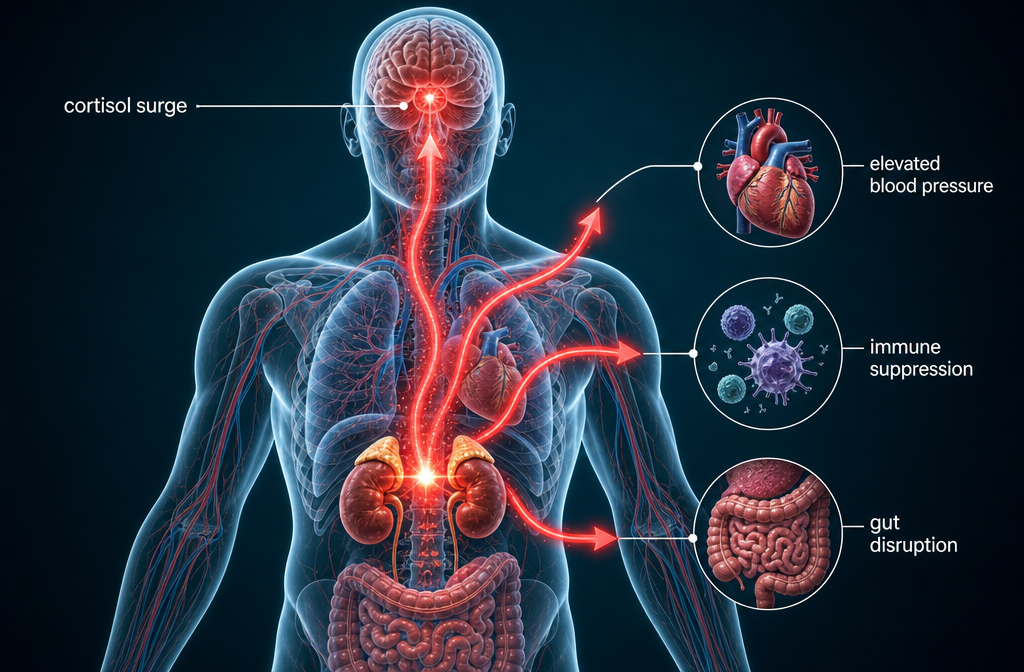
Chronic stress does not simply make you feel bad — it physically alters your body’s internal environment in measurable, documented ways. When the stress response fires repeatedly without adequate recovery, the cumulative physiological toll becomes the central health threat.
The body’s stress system — the hypothalamic-pituitary-adrenal (HPA) axis — is designed for short bursts of activation. Under acute stress, it releases cortisol and adrenaline to sharpen focus and boost energy. That’s useful when the threat is real and temporary. The problem arises when the system stays switched on.
Key physiological changes from prolonged stress include:
- Chronically elevated cortisol: Disrupts blood sugar regulation, suppresses immune responses, and interferes with sleep architecture .
- Persistent inflammation: Stress hormones trigger low-grade inflammatory responses that damage blood vessel walls and tissue over time.
- Allostatic load: The cumulative “wear and tear” on organs and systems from repeated or chronic stress activation — recognized by Mayo Clinic and the APA as the core long-term danger.
- Hormonal dysregulation: Chronic stress interferes with reproductive hormones, thyroid function, and insulin sensitivity.
- Nervous system imbalance: The autonomic nervous system stays tilted toward “fight or flight,” reducing the body’s ability to rest and repair.
Common mistake: Many people assume stress only matters when it feels overwhelming. In reality, low-grade, persistent stress — from financial pressure, relationship strain, or work overload — creates the same physiological cascade, just more slowly.
How Does Sustained Stress Impact Major Organ Systems and Overall Health?
Sustained stress affects virtually every major organ system. The long-term effects of stress on the body are not limited to one area — they ripple across interconnected systems in ways that can be difficult to trace back to their source.
Here’s a system-by-system breakdown:
| Organ System | Long-Term Stress Effect |
|---|---|
| Cardiovascular | Elevated blood pressure, arterial damage, increased heart attack and stroke risk [6] |
| Immune | Suppressed immune responses, more frequent illness, slower wound healing [2] |
| Digestive | IBS, acid reflux, altered gut microbiome, nausea [1] |
| Endocrine/Metabolic | Insulin resistance, weight gain (especially abdominal), risk of type 2 diabetes [4] |
| Musculoskeletal | Chronic muscle tension, headaches, increased pain sensitivity [1] |
| Neurological | Memory impairment, reduced concentration, anxiety, depression [5] |
| Reproductive | Irregular menstrual cycles, reduced libido, fertility disruption [3] |
| Respiratory | Worsened asthma symptoms, increased susceptibility to respiratory infections [2] |
The digestive system is particularly telling. The gut contains its own extensive nerve network (the enteric nervous system), and it communicates constantly with the brain. Chronic stress disrupts this communication, alters gut motility, and changes the balance of gut bacteria — all of which contribute to digestive disorders that many people never connect to stress.
Choose this framing if: You’re experiencing multiple seemingly unrelated health complaints (fatigue, gut issues, frequent colds, muscle tension). Chronic stress is often the common thread that conventional symptom-by-symptom treatment misses.
Can Long-Term Stress Permanently Alter Brain Chemistry and Immune Function?
Yes — and this is one of the most serious and underappreciated long-term effects of stress on the body. Sustained stress exposure can produce structural and chemical changes in the brain that persist even after the stressor is removed.
What happens to the brain under chronic stress:
- The hippocampus — critical for memory formation and emotional regulation — can physically shrink with prolonged cortisol exposure. Research cited by the APA links chronic stress to reduced hippocampal volume, which impairs memory and increases vulnerability to depression.
- The prefrontal cortex, which governs rational decision-making and impulse control, becomes less active under sustained stress, while the amygdala (the brain’s threat-detection center) becomes hyperreactive.
- Neurotransmitter systems — particularly serotonin, dopamine, and GABA — are disrupted, raising the risk of anxiety disorders and clinical depression.
What happens to immune function:
While short-term stress can briefly sharpen immune responses (a useful evolutionary feature), long-term stress does the opposite. According to WMCHealth and research cited by the Rowan Center :
- The body produces fewer infection-fighting white blood cells.
- Inflammatory markers remain chronically elevated, which paradoxically both suppresses targeted immune responses and damages healthy tissue.
- Vaccine effectiveness may be reduced in people under sustained stress.
- Wound healing slows measurably.
Edge case: Some individuals under chronic stress experience autoimmune flares — the immune system, dysregulated by sustained cortisol exposure, begins attacking the body’s own tissue. Conditions like rheumatoid arthritis, lupus, and psoriasis are known to worsen during prolonged stress periods
The brain and immune changes are not always permanent. Evidence shows that sustained stress reduction — through therapy, exercise, and sleep — can support neurogenesis (new brain cell growth) and immune recovery. But the longer stress goes unmanaged, the harder reversal becomes.
What Are the Most Serious Health Risks Associated With Unmanaged Chronic Stress?
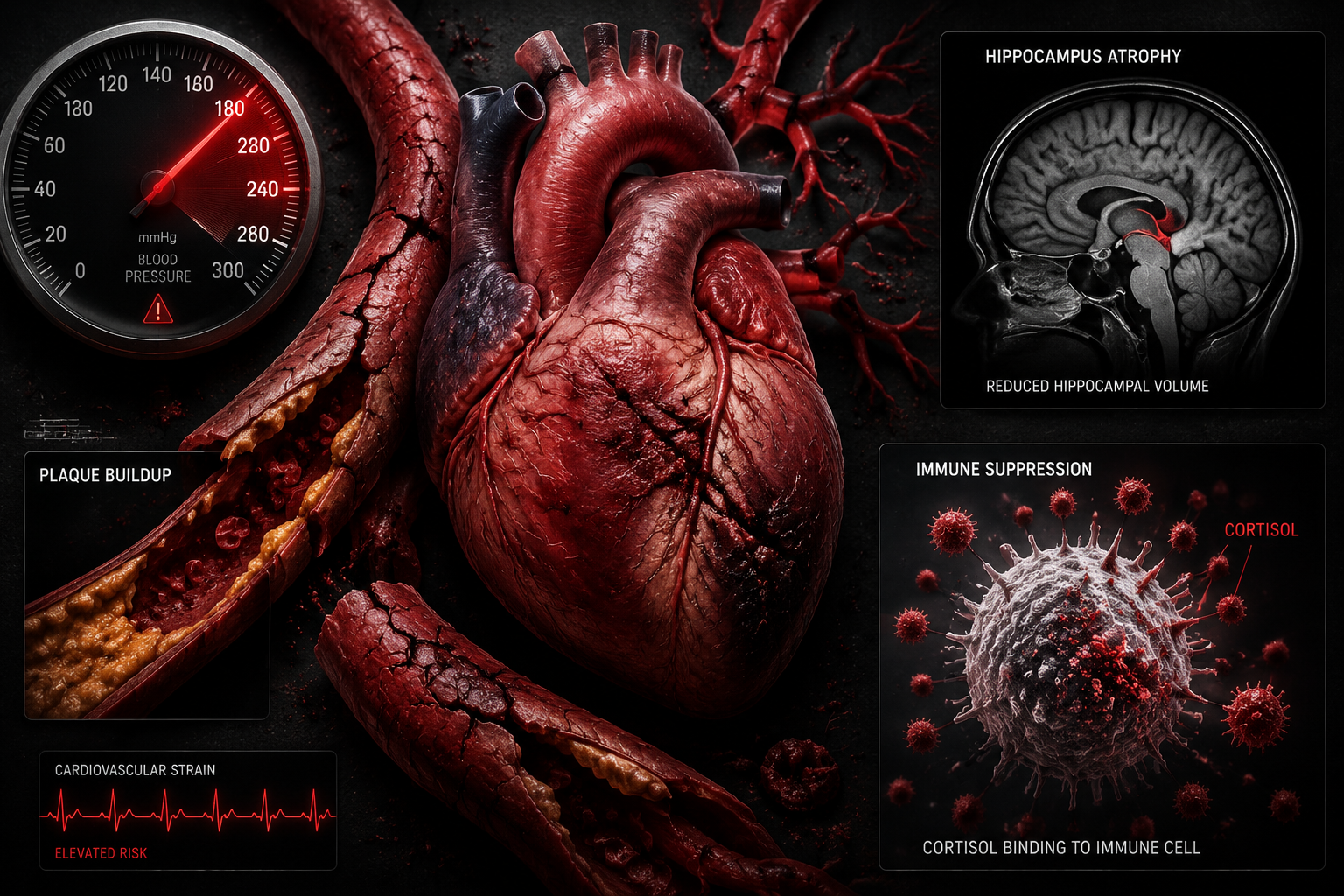
Unmanaged chronic stress is a genuine long-term health threat, not a lifestyle inconvenience. The most serious risks are well-documented across major medical institutions.
The top health risks from unmanaged chronic stress:
1. Cardiovascular Disease This is the best-documented long-term consequence. Chronic stress elevates heart rate and blood pressure persistently, damages arterial walls, promotes plaque formation (atherosclerosis), and raises the risk of heart attack and stroke. ColumbiaDoctors identifies stress as one of nine major contributors to heart attack risk. The American Heart Association data, summarized by the APA and Rowan Center, links long-term stress directly to hypertension and major cardiovascular events.
2. Type 2 Diabetes Prolonged cortisol elevation raises blood glucose levels and promotes insulin resistance. Combined with stress-driven overeating and reduced physical activity, this creates a pathway to metabolic syndrome and type 2 diabetes.
3. Clinical Depression and Anxiety Disorders The neurological changes described above — hippocampal shrinkage, neurotransmitter disruption, amygdala hyperactivity — translate into diagnosable mental health conditions. Chronic stress is one of the strongest known risk factors for both depression and generalized anxiety disorder.
4. Immune Compromise and Chronic Illness Suppressed immunity means more frequent infections, slower recovery, and greater susceptibility to chronic inflammatory diseases.
5. Compounding Behavioral Risks Chronic stress drives people toward unhealthy coping: overeating (particularly calorie-dense foods), alcohol consumption, smoking, and physical inactivity. Each of these independently raises cardiometabolic risk — and together, they dramatically accelerate the damage.
If you’re also managing weight-related concerns that stress may be driving, our complete guide to healthier weight management in 2026 covers the hormonal and behavioral connections in depth.
How Do Stress Hormones Like Cortisol Affect Bodily Functions Over Time?
Cortisol is the body’s primary stress hormone, and in the right doses, it’s essential — it regulates metabolism, reduces inflammation acutely, and helps control the sleep-wake cycle. The problem is chronic overexposure.
What elevated cortisol does over time:
- Raises blood sugar: Cortisol signals the liver to release glucose for quick energy. Chronically, this keeps blood sugar elevated and strains the pancreas.
- Promotes fat storage: Specifically, cortisol drives fat deposition in the abdomen — the most metabolically dangerous location, associated with cardiovascular and diabetes risk.
- Increases appetite and cravings: High cortisol raises appetite and drives cravings for high-fat, high-sugar foods — a biological response that made sense in food-scarce environments but is harmful in modern life.
- Disrupts sleep: Cortisol naturally peaks in the morning and drops at night. Chronic stress inverts or flattens this rhythm, causing insomnia or non-restorative sleep — which then further elevates cortisol the next day.
- Suppresses non-essential systems: Under sustained cortisol exposure, the body deprioritizes digestion, reproduction, and immune surveillance — all of which suffer as a result.
Adrenaline (epinephrine) plays a complementary role: it raises heart rate and blood pressure acutely. In chronic stress, repeated adrenaline surges contribute to arterial stiffness and cardiovascular wear.
Decision rule: If you notice persistent abdominal weight gain, disrupted sleep, frequent illness, and mood instability occurring together — without an obvious medical cause — chronically elevated cortisol is a reasonable hypothesis worth discussing with a healthcare provider.
What Are the Long-Term Effects of Stress on the Body’s Mental Health?
Mental health and physical health are not separate categories when it comes to chronic stress — they are deeply intertwined. The long-term effects of stress on the body include measurable psychological consequences that can become self-reinforcing cycles.
The mental health consequences of chronic stress include:
- Anxiety disorders: Persistent activation of the threat-response system trains the brain to stay on alert, even in the absence of real danger. This can solidify into generalized anxiety disorder or panic disorder.
- Depression: The combination of hippocampal shrinkage, disrupted serotonin and dopamine systems, and chronic fatigue creates fertile ground for clinical depression.
- Cognitive decline: Memory problems, difficulty concentrating, and reduced decision-making capacity are common in people under sustained stress — and in older adults, chronic stress is associated with accelerated cognitive aging.
- Burnout: A specific syndrome of emotional exhaustion, depersonalization, and reduced efficacy — increasingly recognized as a serious health condition, not just workplace fatigue.
Relationship stress deserves particular mention. Chronic interpersonal conflict — including marital strain — is one of the most potent and persistent stressors humans face. If relationship stress is a significant factor in your life, resources like this guide to understanding and addressing relationship difficulties may be a useful starting point.
How Can You Recognize and Manage the Long-Term Effects of Stress on the Body?
Recognizing chronic stress early — before it produces serious organ damage — is the most effective form of intervention. Management doesn’t require dramatic lifestyle overhauls; consistent, evidence-based habits make a measurable difference.
Warning signs that chronic stress may be affecting your health:
- Persistent fatigue that sleep doesn’t resolve
- Frequent headaches or muscle tension (especially neck and shoulders)
- Digestive complaints without a clear medical cause
- Recurring colds or slow recovery from illness
- Unexplained weight changes, particularly abdominal gain
- Mood instability, irritability, or persistent low mood
- Difficulty concentrating or remembering things
Evidence-based management strategies:
- Regular aerobic exercise — Even 30 minutes of moderate exercise most days measurably lowers cortisol and raises mood-regulating neurotransmitters.
- Consistent, quality sleep — Sleep is when cortisol resets. Prioritizing 7-9 hours of sleep is among the highest-leverage interventions available.
- Mindfulness-based stress reduction (MBSR) — Structured mindfulness practice has documented effects on cortisol levels and anxiety symptoms.
- Cognitive behavioral therapy (CBT) — For stress that has progressed to anxiety or depression, CBT is among the most evidence-supported treatments available.
- Social connection — Strong social support is independently associated with lower cortisol levels and better immune function.
- Limiting alcohol and caffeine — Both can amplify cortisol responses and disrupt sleep, compounding stress physiology.
Physical activity also intersects with weight management in important ways when stress is involved. For a practical approach, see our weight loss and healthier living guide.
FAQ: Long-Term Effects of Stress on the Body
Q: How long does stress have to last before it causes physical damage? There’s no single threshold, but research suggests that sustained stress lasting weeks to months — rather than days — is when measurable physiological changes (elevated cortisol, immune suppression, blood pressure changes) begin to accumulate. The longer it continues unmanaged, the greater the cumulative damage.
Q: Can the body recover from years of chronic stress? Yes, partially and often significantly — but recovery takes time and active intervention. Neurogenesis (new brain cell growth) can occur with exercise and therapy. Immune function can improve with stress reduction. However, some cardiovascular changes (like arterial stiffness) may be only partially reversible, which is why early intervention matters.
Q: Is chronic stress the same as anxiety? No, though they overlap. Chronic stress is a physiological state driven by ongoing external demands. Anxiety is a mental health condition characterized by persistent worry and fear that may persist even without an obvious stressor. Chronic stress can trigger or worsen anxiety disorders.
Q: Does everyone respond to chronic stress the same way? No. Genetics, early life experiences, social support, and coping resources all influence how an individual’s body responds to sustained stress. Some people are more physiologically resilient; others are more vulnerable to stress-related health consequences.
Q: Can stress cause heart attacks directly? Stress doesn’t typically cause a heart attack in isolation, but it is a documented contributing risk factor. Chronic stress elevates blood pressure, promotes arterial inflammation, and drives behaviors (poor diet, inactivity, smoking) that collectively raise heart attack risk significantly.
Q: How does stress affect weight? Chronic cortisol elevation increases appetite, drives cravings for calorie-dense foods, and promotes fat storage specifically in the abdomen. This can lead to weight gain even without significant changes in diet. Stress can also cause weight loss in some individuals through appetite suppression and digestive disruption.
Q: Does stress affect children differently than adults? Yes. Children’s developing brains and stress-response systems are particularly sensitive to chronic stress. Early-life chronic stress (from adverse childhood experiences) can alter HPA axis development in ways that affect health outcomes decades later .
Q: Can exercise alone counteract the long-term effects of stress on the body? Exercise is one of the most effective single interventions — it lowers cortisol, raises mood-regulating neurotransmitters, improves sleep, and supports immune function. But for high-burden chronic stress, exercise works best as part of a broader approach that includes sleep, social support, and professional help when needed.
Q: Is burnout the same as chronic stress? Burnout is a specific outcome of prolonged occupational or caregiving stress — characterized by emotional exhaustion, cynicism, and reduced effectiveness. It shares physiological features with chronic stress but represents a more advanced stage of depletion.
Q: What’s the fastest way to lower cortisol? Acute cortisol reduction can happen within minutes through slow diaphragmatic breathing, brief exercise, or laughter. For lasting cortisol normalization, consistent sleep, regular aerobic exercise, and reduced stressor exposure over weeks are required.
Conclusion: Taking Chronic Stress Seriously Before It Takes a Toll
Chronic stress earns the label “silent saboteur” because its most serious damage accumulates quietly — in arterial walls, immune cells, brain tissue, and metabolic pathways — long before any single dramatic symptom appears. The long-term effects of stress on the body are not hypothetical risks for other people. They are well-documented, physiologically measurable consequences that affect millions of adults who may attribute their symptoms to aging, genetics, or bad luck.
Actionable next steps you can take today:
- Audit your stressors honestly. Identify which are controllable and which require acceptance or professional support.
- Prioritize sleep as a non-negotiable. Seven to nine hours is not a luxury — it’s when cortisol resets and tissue repairs.
- Move your body consistently. Thirty minutes of moderate aerobic exercise most days is one of the most evidence-supported cortisol-lowering interventions available.
- Talk to someone. Whether a trusted friend, a therapist, or your primary care physician — social connection and professional support both measurably reduce the physiological burden of stress.
- Use the self-assessment above as a starting point for an honest conversation with your healthcare provider.
If relationship stress is a significant contributor to your chronic stress load, exploring resources like this guide to saving your marriage and reducing interpersonal conflict may address one of the most potent — and most treatable — sources of sustained stress.
The body is resilient. But resilience has limits, and chronic stress tests those limits every single day it goes unaddressed. The best time to act was before symptoms appeared. The second-best time is now.
References
[1] Stress symptoms: Effects on your body and behavior — https://www.mayoclinic.org/healthy-lifestyle/stress-management/in-depth/stress/art-20046037
[2] The Hidden Effects Of Chronic Stress On Your Body And Mind — https://www.wmchealth.org/living-well/the-hidden-effects-of-chronic-stress-on-your-body-and-mind
[3] How Chronic Stress Affects The Body — https://www.drswetech.com/how-chronic-stress-affects-the-body/
[4] How Chronic Stress Affects Your Body: Effects, Health Risks, And Management Strategies — https://rowancenterla.com/how-chronic-stress-affects-your-body-effects-health-risks-and-management-strategies/
[5] Stress effects on the body — https://www.apa.org/topics/stress/body
[6] Chronic Stress Can Hurt Your Overall Health — https://www.columbiadoctors.org/news/chronic-stress-can-hurt-your-overall-health
[7] Burnout In 2026 — https://www.pathways-ky.org/burnout-in-2026/