


Every marriage begins with intention — two people choosing each other, building a shared life, and believing in a future together. Yet somewhere along the way, many couples find themselves in a place they never anticipated: disconnected, hurt, and unsure whether the relationship can survive.
Divorce is not a sign of personal failure. It is, in most cases, the culmination of long-standing patterns that went unaddressed — patterns that, with the right awareness and support, can often be changed.
How to Stop Divorce examines the most common reasons marriages break down, what the research tells us about why those patterns emerge, and — most importantly — what couples can do to interrupt them. Whether you are navigating a crisis right now or simply want to strengthen your relationship before cracks appear, this guide is for you.
How to Stop Divorce: Why Marriages Break Down: A Deeper Look
Relationship researchers, including the pioneering work of Dr. John Gottman at the University of Washington, have identified that most marriages do not collapse suddenly. They erode gradually — through small moments of disconnection, unresolved conflict, and unmet emotional needs that accumulate over years.
Understanding the specific forces driving marital breakdown is the first step toward reversing them.
1. Communication Breakdown: The Silent Relationship Killer
Poor communication is cited in nearly every study on divorce as a primary contributing factor. But communication breakdown is rarely about couples who simply stop talking. More often, it is about couples who talk in ways that deepen distance rather than build connection.
Dr. Gottman identified four destructive communication patterns he called the “Four Horsemen” — predictors of divorce with striking accuracy:
- Criticism — attacking your partner’s character rather than addressing a specific behavior
- Contempt — expressing disgust, mockery, or superiority toward your partner, which research identifies as the single strongest predictor of divorce
- Defensiveness — deflecting responsibility and responding to complaints with counter-complaints
- Stonewalling — emotionally withdrawing from interaction, often as a response to feeling overwhelmed
Recognizing these patterns in your own relationship is not a reason for despair — it is an opportunity. These are learned behaviors, and they can be unlearned with consistent effort and, often, professional guidance.
2. Financial Stress and Money Conflict
A 2012 study published in the journal Family Relations found that financial disagreements are among the top predictors of divorce, more persistent and harder to resolve than conflicts about household tasks or parenting.
This is partly because money is rarely just money. Financial disputes are often proxy conflicts about deeper issues: control, security, values, and power within the relationship. One partner who saves compulsively and one who spends freely are not just disagreeing about budgets — they are expressing fundamentally different emotional relationships with safety and freedom.
Common financial flashpoints in marriages include:
- Unequal income and the power dynamics it creates
- Hidden debt or undisclosed spending habits
- Conflicting financial goals — one partner focused on present enjoyment, another on long-term security
- Economic hardship such as job loss, which dramatically increases divorce risk
- Disagreements about financial responsibility to extended family
Addressing financial conflict in marriage requires both practical tools (shared budgeting, financial transparency) and deeper emotional work around what money represents to each partner.
3. Infidelity: Betrayal and the Path Forward
Infidelity is cited as a primary reason for divorce in approximately 20–40% of cases, depending on the population studied. Yet the research on what drives affairs offers a more complex picture than simple moral failure.
Esther Perel, a world-renowned couples therapist, argues that affairs are rarely just about sex or physical attraction. They are frequently about a partner seeking to feel alive, desired, or seen in ways the marriage no longer provides. This does not excuse betrayal — but understanding its roots is essential for any couple considering reconciliation.
What the research tells us about infidelity:
- Emotional affairs — intense non-physical connections that cross emotional boundaries — can be just as damaging as physical ones
- The aftermath of an affair involves a grief process, not just a trust exercise
- Couples who work through infidelity with professional guidance have a measurable chance of building a stronger relationship than they had before the betrayal
- Reconciliation requires full transparency, accountability, and a genuine commitment to understanding what needs went unmet
If your marriage has been affected by infidelity, professional support is not optional — it is the most reliable path through.
4. Growing Apart: The Gradual Drift of Identity and Intimacy
Unlike the more dramatic causes of marital breakdown, “growing apart” can feel almost too quiet to name. There is no single betrayal, no explosive argument — just a slow accumulation of separate lives, separate interests, and the dawning recognition that the two people in the marriage have become strangers.
Psychologists refer to this as “identity drift” — a process in which individuals evolve in ways that their relationship does not accommodate. Without regular, intentional investment in shared meaning and emotional connection, even deeply loving couples can find themselves on diverging paths.
Signs that a couple may be drifting apart include:
- Preferring time apart over time together, without guilt or negotiation
- Losing interest in your partner’s inner world — their dreams, fears, and daily experiences
- Absence of physical affection that is not tied to sexual intent
- Feeling more like roommates or co-parents than romantic partners
- A persistent sense of loneliness within the marriage
The antidote to growing apart is not grand gestures — it is consistent, small acts of turning toward each other. Questions that show genuine interest. Rituals that mark connection. A shared curiosity about who your partner is becoming.
5. Chronic Unresolved Conflict and Emotional Safety
Every couple argues. Research consistently shows that the presence of conflict in a marriage is not the problem — the management of that conflict is. Couples who fight and repair, who argue and reconnect, tend to build durable relationships. Couples who fight and never resolve, or who avoid conflict entirely, accumulate a reservoir of unspoken resentment that eventually becomes corrosive.
Psychological safety — the sense that you can express your needs, fears, and frustrations without fear of ridicule, abandonment, or retaliation — is the foundation of a healthy relationship. When that safety is absent, partners begin to self-censor, withdraw, or engage in destructive conflict patterns.

How to Stop Divorce: Evidence-Based Strategies for Rebuilding and Strengthening Your Marriage
Understanding why marriages break down is only half the picture. What matters most is what couples do with that understanding. The following strategies are grounded in decades of relationship research and clinical practice.
Rebuild the Foundation of Communication
Healthy communication in marriage is a skill, not a personality trait. It can be learned, practiced, and improved at any stage.
- Use “I” statements rather than “You” accusations: “I feel unheard when decisions are made without me” carries far more relational weight than “You never listen to me”
- Practice active listening — not preparing your rebuttal while your partner speaks, but genuinely seeking to understand their experience
- Create structured check-in conversations: a regular, low-pressure time each week to share appreciations, updates, and any concerns
- Learn to recognize when you or your partner is emotionally flooded (heart rate above 100 bpm, difficulty thinking clearly) and agree to a pause — not a shutdown, but a brief, agreed break before resuming the conversation
Approach Financial Issues as a Team, Not Opponents
Financial healing in a marriage requires both transparency and empathy. Begin by establishing a shared financial reality — a clear, honest picture of income, debt, savings, and goals. Then, explore the emotional meaning each partner attaches to money.
- Hold regular “money dates” — calm, scheduled conversations about finances, not heated reactive discussions during a bill crisis
- Identify your individual “money scripts” — the beliefs about money you absorbed in childhood — and how they are shaping your current conflicts
- Consider working with a financial therapist or couples counselor trained in financial conflict
- Celebrate shared financial milestones to build a sense of teamwork around your financial life
Navigating Rebuilding After Infidelity
Recovering from infidelity is a long, non-linear process that is best undertaken with professional support. There is no shortcut through the pain — but there is a path forward for couples who choose to walk it together.
- The partner who betrayed must take full accountability without minimization or deflection
- The betrayed partner must be allowed space to grieve — and that grief may resurface unexpectedly for months or years
- Both partners must commit to radical transparency and the hard work of understanding what relational needs were unmet prior to the affair
- Couples therapy is not optional in this process — it is the container that makes the work possible
Intentionally Maintain Emotional and Physical Connection
Intimacy in a long-term relationship does not sustain itself automatically — it requires cultivation. This is not a criticism of your relationship; it is simply the nature of human attention in busy lives.
- Practice the “6-second kiss” — a greeting or farewell kiss that is long enough to register emotionally
- Ask your partner a deep question once a week — not “How was your day?” but something that invites genuine reflection and reveals their inner world
- Create rituals of connection: a morning coffee together before the day begins, a walk on Sunday evenings, a shared TV series watched together and only together
- Physical affection that is not sexually oriented — holding hands, a hand on the shoulder, a hug that lasts — is a powerful and often underestimated form of emotional bonding

How to Stop Divorce: Know When — and How — to Seek Professional Support
One of the most damaging myths about couples therapy is that it is a last resort — something you do when your marriage is already over. In reality, research shows that couples wait an average of six years after serious problems emerge before seeking professional help. By that point, entrenched patterns have often made recovery much harder.
Couples therapy is most effective when entered early, with both partners genuinely committed to the process. Effective therapeutic modalities include:
- Gottman Method Couples Therapy — focused on building friendship, managing conflict, and creating shared meaning
- Emotionally Focused Therapy (EFT) — developed by Dr. Sue Johnson, EFT addresses the attachment needs driving relationship conflict
- Integrative Behavioral Couples Therapy (IBCT) — particularly effective for couples with deeply entrenched conflict patterns
Seeking help is not a sign that your marriage has failed. It is a sign that your marriage matters enough to fight for.
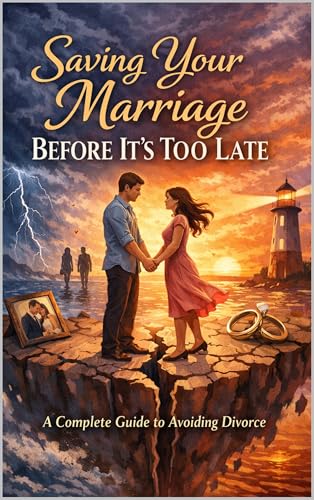
Summary: How to Stop Divorce, Choosing the Marriage You Want
Divorce is not inevitable. It is the outcome of patterns — patterns of communication, connection, conflict, and care — that, when understood clearly, can be changed with effort, awareness, and support.
The most common reasons marriages break down — communication failure, financial conflict, infidelity, emotional drift, and unresolved resentment — are all, to varying degrees, addressable. They are not character verdicts. They are relationship challenges that millions of couples have faced and, with the right tools and commitment, have moved through.
What the research tells us, above all, is that the quality of your marriage is not fixed at the altar. It is shaped, every day, by the choices both partners make — to turn toward each other or away, to engage or withdraw, to invest in the relationship or leave it to chance.
If you are reading this in a moment of marital pain, know this: the fact that you are seeking understanding is itself a meaningful act. It means you have not stopped caring. And that is the most important place to begin.
Take the Next Step: How to Stop Divorce, Your Marriage Deserves More Than Survival
If any of the patterns described in this article resonate with your experience, please do not wait. The cost of delay is not just more months of unhappiness — it is the compounding of patterns that become increasingly difficult to change.
Here is what you can do today:
- Talk to your partner about one thing you read that felt true — not as an accusation, but as an opening
- Research couples therapists in your area who specialize in the challenges you are facing
- Consider reading “The Seven Principles for Making Marriage Work” by Dr. John Gottman, or “Hold Me Tight” by Dr. Sue Johnson — both are research-grounded, practical, and deeply humane
- If you are in crisis, contact a licensed marriage and family therapist (LMFT) or a clinical psychologist with relationship specialization
Your marriage is worth the effort. The work is hard — and it is also one of the most meaningful investments you will ever make.
Frequently Asked Questions About, How to Stop Divorce, Divorce and Marriage Reconciliation
The following questions are among the most commonly asked by couples navigating marital distress. The answers draw on current relationship research and clinical best practice.
Q: What are the most common reasons couples get divorced?
The most frequently cited reasons for divorce include chronic communication breakdown, financial conflict, infidelity, growing emotional distance, and persistent unresolved conflict. Research by Dr. John Gottman identifies contempt — a pattern of expressing superiority or disgust toward a partner — as the single strongest behavioral predictor of divorce. Importantly, most marriages do not collapse due to one dramatic event; they erode through years of small, repeated disconnections that go unaddressed.
Q: Can a marriage be saved after infidelity?
Yes — and the research on this is more encouraging than many couples expect. Studies suggest that roughly 60–75% of couples who seek professional therapy after an affair choose to remain together, and a meaningful portion report that the process of rebuilding ultimately deepened their relationship. Recovery requires full accountability from the partner who strayed, space for the betrayed partner to grieve without a timeline, radical transparency going forward, and ideally, structured support from a qualified couples therapist. It is not a quick process, and it is not guaranteed — but it is genuinely possible.
Q: How do I know if my marriage is worth saving?
This is one of the most important — and most personal — questions a person in marital distress can ask. A few indicators that reconciliation may be viable include: both partners retain some degree of respect for each other, at least one partner still feels emotionally invested in the relationship’s future, the core issues have not been addressed with proper support yet, and there is no ongoing pattern of abuse or safety concerns. If you are uncertain, a few sessions with a qualified couples or individual therapist can help you gain clarity — not to be told what to decide, but to understand your own needs more fully.
Q: When is the right time to start couples therapy?
The honest answer is: earlier than most couples think. Research shows that the average couple waits six years after serious problems emerge before seeking professional help. By that point, negative patterns are deeply entrenched and harder to shift. Couples therapy is most effective when both partners still have emotional investment in the relationship and when destructive cycles have not yet become the dominant dynamic. You do not need to be in crisis to benefit from therapy — many couples use it proactively, as a space for growth and deeper understanding rather than emergency repair.
Q: How does financial stress lead to divorce, and what can we do about it?
Financial stress does not cause divorce directly — rather, it amplifies pre-existing tension and triggers conflicts rooted in deeper differences around values, control, and security. When money becomes tight, couples often lose the emotional bandwidth to manage conflict constructively, and underlying resentments surface more readily. To address financial stress as a couple, the most important first step is establishing a shared, transparent view of your financial reality — without blame. From there, exploring the emotional meanings each partner attaches to money (often shaped by childhood experiences) can unlock much of the conflict. Working with a financial counselor alongside a couples therapist can be a particularly effective combination.
Q: Is divorce ever the right choice?
This is a question only the individuals involved can answer—and it deserves an honest, nuanced response. Divorce is the appropriate choice in situations involving ongoing abuse, persistent safety concerns, or where one or both partners have genuinely exhausted every avenue of repair without sustainable change.
It is not a moral failure, and in some circumstances it is the healthiest decision for everyone involved, including children. What this article advocates for is not staying in a marriage at any cost—it is ensuring that, before the decision is made, couples have access to accurate information, professional support, and a clear-eyed understanding of what is actually driving the breakdown. Decisions made from that place of clarity, whatever they are, tend to be ones people can live with.



Pingback: 27 Proven Small Starter Business Ideas That Actually Work in 2025 - CDRadiant
Pingback: Social Media and Youth Mental Health: Addiction Concerns 2026
Pingback: Real Parenting Advice for First-Time Parents in 2026
Pingback: 10 Game-Changing Dating Tips Every Modern Woman Needs to Know - CDRadiant