

Last updated: May 17, 2026
Quick Answer: The most effective methods of stress management combine fast-acting techniques (like deep breathing and grounding) with long-term habits (like regular exercise, mindfulness, and strong social support). No single method works for everyone, but starting with two or three science-backed strategies and building from there is the most practical approach for lasting relief.
Key Takeaways: 10 Proven Methods of Stress Management
- Deep breathing and grounding exercises can reduce acute stress within minutes by calming the nervous system.
- Regular physical activity, even 30 minutes of light movement daily, is one of the most consistently supported stress-reduction tools in clinical research.
- Mindfulness and meditation (as little as 5–10 minutes daily) are linked to lower cortisol levels and reduced anxiety over time.
- Chronic stress has real physiological consequences, including elevated cortisol, disrupted sleep, and increased cardiovascular risk.
- A personalized stress management plan works better than a generic one because triggers, lifestyle, and resources differ from person to person.
- Cognitive reframing, time management, and journaling address the mental roots of stress, not just the symptoms.
- Social connection is a clinically recognized buffer against stress, and isolation tends to make stress worse.
- Sleep quality directly affects how well your body and mind handle daily stressors.
What Exactly Is Stress, and Why Does It Demand a Real Method of Stress Management?
Stress is your body’s automatic response to any demand or threat, real or perceived. It triggers a cascade of hormones, including cortisol and adrenaline, that prepare you to act fast. Short-term stress can actually sharpen focus, but when it becomes chronic, the same biological system that protects you starts to work against you.
Chronic stress has measurable physiological effects:
- Elevated cortisol disrupts sleep, digestion, and immune function.
- Prolonged stress increases the risk of cardiovascular disease, anxiety disorders, and depression.
- It impairs memory and concentration over time
- It can worsen existing health conditions, including diabetes and autoimmune disorders
This is why a consistent, intentional method of stress management is not optional for long-term health. It is a core part of taking care of yourself.
“Stress is not just a feeling. It is a full-body event with real health consequences if left unaddressed.”
What Are the Most Effective Science-Backed Methods to Reduce Stress Quickly?
For fast relief, breathing techniques and grounding exercises are your best tools. They work directly on the nervous system and require no equipment or special training.
1. Deep Breathing (4-4-6 Method)
The 4-4-6 breathing technique is one of the fastest ways to interrupt the stress response. Inhale for 4 seconds, hold for 4 seconds, then exhale slowly for 6 seconds. Repeat for 3–5 minutes. The extended exhale activates the parasympathetic nervous system, which signals your brain to slow down and relax.
How to do it:
- Sit or lie in a comfortable position.
- Inhale through your nose for 4 counts.
- Hold your breath for 4 counts.
- Exhale slowly through your mouth for 6 counts.
- Repeat 5–10 times.
2. The 5-4-3-2-1 Grounding Technique
When stress tips into anxiety or racing thoughts, grounding brings you back to the present moment. Name 5 things you can see, 4 you can physically touch, 3 you can hear, 2 you can smell, and 1 you can taste. This method disrupts the mental loop of worry by redirecting attention to your immediate environment.
Choose deep breathing if your stress is physical (tight chest, fast heartbeat). Choose grounding if your stress is mental (racing thoughts, panic, overwhelm).
Can Mindfulness and Meditation Really Help with Long-Term Stress Reduction?
Yes, and the evidence is consistent. Mindfulness-based practices are among the most well-researched methods of stress management available, with support from sources including the Mayo Clinic and the CDC.
3. Mindfulness Meditation
Mindfulness means paying deliberate, non-judgmental attention to the present moment. Even 5–10 minutes of daily practice has been linked to lower cortisol levels, reduced anxiety, and improved overall well-being. Apps like Calm, Headspace, and Insight Timer make it easy to start with guided sessions.
A simple daily routine:
- Morning: 10 minutes of guided breathing or body scan meditation
- Midday: 2-minute mindful pause (focus on breath, notice surroundings)
- Evening: Brief gratitude reflection before sleep
Common mistake: Expecting immediate results. Mindfulness builds its effect over weeks, not days. Consistency matters more than session length.
How Can I Develop a Personalized Method of Stress Management for My Lifestyle?
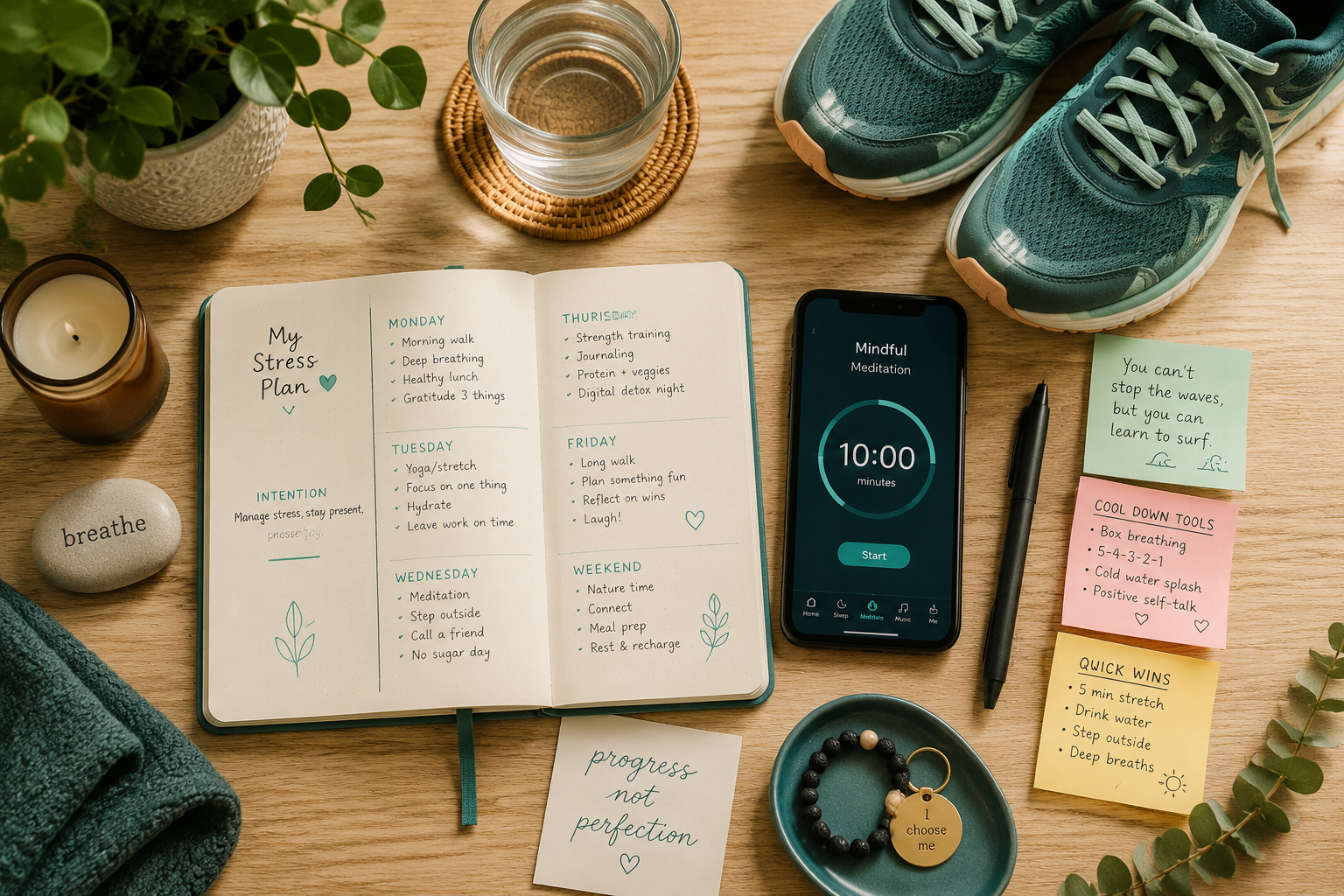
A personalized plan starts with identifying your specific stress triggers, then matching techniques to your schedule, preferences, and resources. A strategy that works for a shift worker is different from one that works for a remote professional or a parent of young children.
4. Physical Activity
Regular movement is one of the most universally supported stress-management tools. The U.S. National Institute of Mental Health cites physical activity as among the most effective ways to combat stress and improve mood. You do not need a gym membership or intense workouts. A 30-minute walk, a yoga session, or even dancing in your kitchen counts.
Why it works: Exercise reduces cortisol and adrenaline, and it releases endorphins, which are natural mood elevators.
| Activity Type | Time Needed | Stress Benefit |
|---|---|---|
| Brisk walking | 20–30 min | Reduces cortisol, improves mood |
| Yoga | 20–45 min | Lowers tension, improves sleep |
| Strength training | 30–45 min | Builds resilience, boosts confidence |
| Dancing | 15–20 min | Fun, social, endorphin-boosting |
| Swimming | 20–30 min | Full-body relaxation, rhythmic calm |
If you’re also working on physical wellness goals alongside stress reduction, our complete guide to healthier living in 2026 covers how lifestyle habits connect.
5. Journaling and Expressive Writing
Writing about your thoughts and feelings gives stress a place to go outside your head. It also helps you spot patterns in what triggers you. Spend 10–15 minutes writing freely about what is bothering you, without editing or judgment.
Choose journaling if you tend to ruminate or replay stressful events mentally. It is especially useful for people who find talking about feelings difficult.
6. Time Management and Priority Setting
Disorganization and overcommitment are major stress amplifiers. Learning to set clear priorities, break tasks into smaller steps, and say no to non-essential demands directly reduces the volume of stress you experience.
A simple weekly planning habit:
- Every Sunday, list your top 3 priorities for the week.
- Block time for those tasks first.
- Schedule at least one recovery activity (rest, hobby, social time).
- Review what went unfinished and decide: reschedule or drop it.
What Are the Top Psychological Techniques for Managing Work-Related Stress?
Work stress often comes from a combination of high demands, low control, and unclear expectations. Psychological techniques target the thinking patterns that turn manageable pressure into chronic stress.
7. Cognitive Reframing
Cognitive reframing means consciously changing the way you interpret a stressful situation. Instead of “I’m going to fail this presentation,” you shift to “I’m well-prepared and I can handle questions as they come.” This is not toxic positivity. It is a skill-based technique used in cognitive behavioral therapy (CBT) to reduce catastrophic thinking.
How to practice it:
- Notice the stressful thought.
- Ask: “Is this thought a fact or an assumption?”
- Identify a more balanced, realistic interpretation.
- Write it down to reinforce the shift.
8. Setting Boundaries and Disconnecting
Constant availability is a modern stress driver. Checking email late at night, skipping breaks, and blurring work-life lines all keep cortisol elevated. Setting firm boundaries around work hours and digital use is a practical method of stress management that many people overlook.
Edge case: If your job genuinely requires after-hours availability, create a “wind-down ritual” (15 minutes of no screens before bed) to signal to your brain that the workday is over.
For those whose work stress is compounded by personal relationship tension, our guide on saving your marriage and building a lasting relationship addresses how stress spills over into home life.
What Are the Physiological Impacts of Chronic Stress, and How Can You Mitigate Them?
Chronic stress keeps your body in a low-grade “fight or flight” state, which causes measurable physical damage over time. Mitigating these effects requires both behavioral changes and lifestyle adjustments.
Key physiological impacts of chronic stress:
- Sleep disruption: Elevated cortisol interferes with deep sleep cycles
- Immune suppression: Chronic stress reduces the body’s ability to fight infection
- Cardiovascular strain: Persistent high blood pressure increases heart disease risk
- Digestive problems: Stress alters gut motility and microbiome balance
- Weight changes: Cortisol promotes fat storage, especially around the abdomen
9. Sleep Hygiene as a Stress Buffer
Sleep is not passive recovery. It is when your brain processes emotional experiences and resets stress hormones. Adults need 7–9 hours per night, and poor sleep makes every other stress-management technique less effective.
Sleep hygiene basics:
- Keep a consistent sleep and wake time, even on weekends.
- Avoid screens for 30–60 minutes before bed.
- Keep your bedroom cool and dark.
- Limit caffeine after 2 p.m.
10. Social Connection and Support
Strong social ties are one of the most consistently cited protective factors against stress-related illness. Talking to a trusted friend, joining a group, or even brief positive social interactions reduce cortisol and increase oxytocin.
Choose social support if your stress is linked to isolation, major life changes, or grief. It is also a powerful complement to any other method of stress management you are already using.
If relationship stress is a factor, our article on how to stop divorce and build a lasting marriage explores how communication and connection reduce relationship-driven stress.
How Do I Choose the Right Combination of Stress Management Methods?
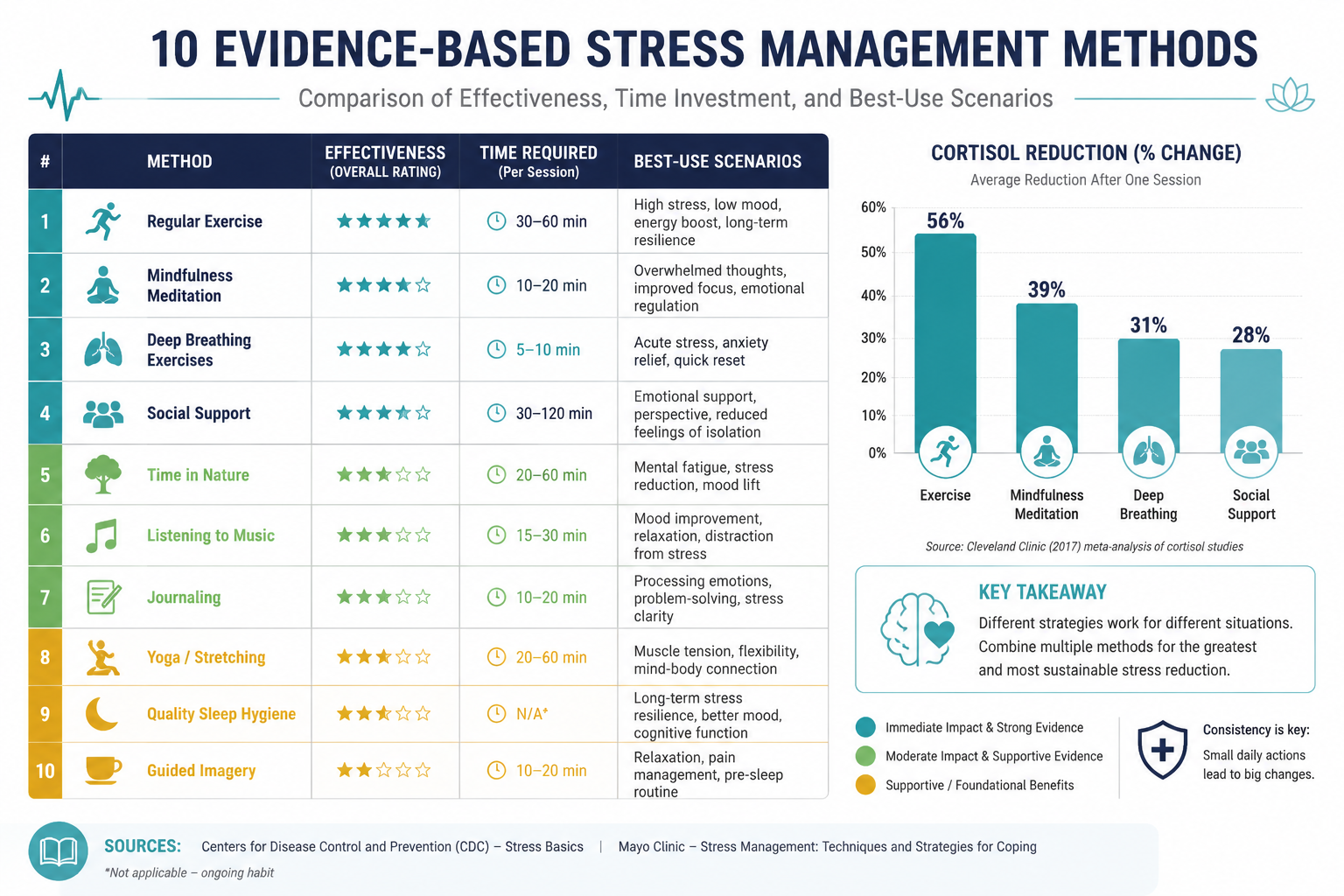
The best approach combines at least one fast-acting technique (breathing, grounding) with one or two long-term habits (exercise, mindfulness, sleep). Start small and build.
A simple starter framework:
| Situation | Best Method to Start With |
|---|---|
| Acute stress spike (right now) | 4-4-6 breathing or 5-4-3-2-1 grounding |
| Daily work pressure | Time management + boundary setting |
| Persistent anxiety | Mindfulness meditation (daily, 10 min) |
| Physical tension or low energy | Exercise (30 min, 3–5x per week) |
| Emotional overwhelm | Journaling + social support |
| Sleep problems | Sleep hygiene routine |
| Negative thought spirals | Cognitive reframing (CBT-based) |
Common mistake: Trying to implement all 10 methods at once. Pick two that fit your current life and practice them consistently for 3–4 weeks before adding more.
FAQ: Method of Stress Management
Q: How quickly can stress management techniques actually work?
A: Breathing techniques and grounding exercises can reduce acute stress within 3–5 minutes. Long-term methods like mindfulness and exercise typically show meaningful results after 4–8 weeks of consistent practice.
Q: Is professional help necessary for stress management?
A: Not always, but if stress is significantly affecting your sleep, work, relationships, or physical health for more than a few weeks, speaking with a therapist or counselor is a smart step. Self-help methods work well for everyday stress but have limits with clinical anxiety or trauma.
Q: Can diet affect stress levels?
A: Yes. Diets high in processed foods and sugar can amplify the body’s stress response, while whole foods, adequate protein, and hydration support more stable cortisol levels. This connects to broader lifestyle wellness, which our guide to healthier living covers in detail.
Q: How much exercise is needed to reduce stress?
A: Research supports as little as 20–30 minutes of moderate activity most days of the week as enough to produce measurable stress-reduction benefits. You do not need intense workouts.
Q: Is meditation suitable for everyone?
A: Meditation is safe and accessible for most people. However, some individuals with trauma histories may find certain forms of meditation uncomfortable. Body-based practices (like gentle yoga or walking) can be a better starting point in those cases.
Q: What is the difference between stress and anxiety?
A: Stress is typically triggered by an external event and resolves when the situation changes. Anxiety persists even without a clear trigger and often involves excessive worry about future events. Many stress management methods help both, but anxiety disorders may require professional treatment.
Q: How does social media use affect stress?
A: Heavy social media use is associated with increased stress, anxiety, and poor sleep in multiple studies. Setting daily screen time limits and turning off non-essential notifications are practical first steps.
Q: Can I manage work-related stress without changing jobs?
A: In most cases, yes. Boundary-setting, cognitive reframing, time management, and regular recovery habits can significantly reduce work stress even in demanding roles. If the environment itself is toxic or unsafe, that is a different conversation.
Q: What role does hydration play in stress management?
A: Even mild dehydration can elevate cortisol and impair cognitive function, making stress harder to handle. Drinking adequate water daily is a simple, often-overlooked support for overall stress resilience.
Q: How do I know if my stress management plan is working?
A: Track two or three indicators: sleep quality, ability to focus, and how quickly you recover after a stressful event. Improvement in these areas over 4–6 weeks is a reliable sign your approach is working.
Conclusion: Build Your Stress Management Plan Starting Today
Stress is unavoidable. How you respond to it is not. The 10 methods covered in this guide range from techniques you can use in the next five minutes (deep breathing, grounding) to habits that build resilience over months (mindfulness, exercise, sleep hygiene, social connection).
Your actionable next steps:
- This week: Choose one fast-acting technique (4-4-6 breathing or 5-4-3-2-1 grounding) and practice it once daily.
- This month: Add one long-term habit, either 20–30 minutes of movement three times per week or 10 minutes of morning mindfulness.
- Ongoing: Use the comparison table in this guide to match techniques to specific stress situations as they arise.
- If needed: Reach out to a mental health professional if stress feels unmanageable despite consistent effort.
A sustainable method of stress management is not about perfection. It is about having a toolkit you can actually use, and using it regularly enough that it becomes second nature. Start with what fits your life right now, and build from there.
References
[1] Stress Management Techniques – https://www.adaptivebehavioralservices.com/mental-wellness-blog/stress-management-techniques
[2] Stress Relief – https://www.southdenvertherapy.com/blog/stress-relief
[3] 10 Proven Stress Reduction Techniques For Anxiety Simple And Effective Guide 2026 – https://vocal.media/longevity/10-proven-stress-reduction-techniques-for-anxiety-simple-and-effective-guide-2026
[4] 16 Ways Relieve Stress Anxiety – https://www.healthline.com/nutrition/16-ways-relieve-stress-anxiety
[5] Relieve Stress And Anxiety – https://counselingcentergroup.com/relieve-stress-and-anxiety/
[6] Stress Awareness Month 10 Management Tips – https://releaf.co.uk/blog/stress-awareness-month-10-management-tips
[7] What Is Stress Management – https://www.mindyog.com/blog/what-is-stress-management/
[8] Index – https://www.cdc.gov/mental-health/living-with/index.html
[9] Art 20047257 – https://www.mayoclinic.org/healthy-lifestyle/stress-management/in-depth/stress-relievers/art-20047257
[10] Stress Management – https://www.helpguide.org/mental-health/stress/stress-management
Meta Title: 10 Proven Methods of Stress Management for Mental Wellness
Meta Description: Discover 10 science-backed methods of stress management, from deep breathing to mindfulness and exercise. Build a personalized plan that actually works in 2026.
Tags: stress management, method of stress management, mindfulness meditation, deep breathing techniques, work stress relief, cognitive reframing, chronic stress, mental wellness, anxiety management, stress reduction strategies, sleep hygiene, grounding techniques