


Last updated: May 12, 2026
Quick Answer: The most effective parenting advice for new parents in 2026 centers on three things: understanding that parenting responsibilities evolve daily, building a parenting philosophy rooted in connection rather than control, and applying consistent parenting discipline with warmth. No single approach works for every family, but grounding your choices in love, consistency, and self-compassion will carry you through even the hardest days.
Key Takeaways
- Parenting is a skill you build over time, not something you’re born knowing.
- Consistent parenting discipline, delivered with warmth, shapes children’s behavior more effectively than punishment alone.
- Breastfeeding is beneficial but not always possible, and bottle-feeding is a completely valid choice.
- Sleep deprivation is real and temporary. Ask for help before you hit empty.
- Your parenting philosophy should prioritize emotional connection and your child’s long-term independence.
- Postpartum depression affects many parents and is treatable. Don’t wait to reach out.
- Quality time matters more than perfect execution of every parenting responsibility.
- Flexibility, self-compassion, and consistency are the three pillars of sustainable early parenthood.
Why This Article Is Worth Reading
Every year, millions of couples step into parenthood carrying a mix of excitement, fear, and a stack of baby books that somehow make things feel more confusing. This guide cuts through the noise. Whether you’re still recovering from morning sickness or you’ve just brought your newborn home, the tips and advice here are grounded in real parenting research and practical experience. We cover parenting responsibilities, parenting philosophy, parenting discipline, and parenting advice for new parents in a way that’s honest, actionable, and genuinely useful for married couples navigating this new chapter together.

What Does It Actually Mean to Embrace Your New Parenting Responsibilities?
Parenting responsibilities don’t arrive with a manual. They expand gradually, from keeping a newborn fed and safe in week one to managing emotions, boundaries, and independence as your child grows.
Modern parenting has shifted significantly. Research shows that today’s parents face escalated expectations: they’re expected to be emotionally available, mentally strong, physically present, and financially stable all at once. That pressure is real, and acknowledging it is the first step to managing it well.
The most grounded parenting philosophy treats parenthood not as a performance but as a relationship. Your job isn’t to be perfect. It’s to show up consistently, repair when you get it wrong, and help your child feel safe. As you navigate new parenthood, remember that parenting responsibilities grow with your child, so you don’t have to figure everything out on day one.
A strong parenting philosophy isn’t built overnight. It’s built in small, repeated moments of connection.
Should You Have a Birth Plan Before the Baby Arrives?
Yes, a birth plan is worth creating, but hold it loosely. It helps you communicate your preferences to your medical team and gives you a sense of agency during labor. However, births rarely follow a script.
Before giving birth, discuss pain management options, who will be in the room, your preferences around cord clamping, and your feeding intentions. If you plan to breastfeed, let your care team know so they can support skin-to-skin contact immediately after delivery. If you’re managing pregnancy symptoms like morning sickness well into the third trimester, note that too, as it can affect your energy during labor.
The best advice here is simple: prepare your birth plan, share it with your partner and provider, and then give yourself full permission to adapt. Flexibility in this moment sets the tone for the parenting journey ahead.
What’s the Best Advice for Newborn Care in the First Few Weeks?
The first weeks of newborn care are about survival, not optimization. Your newborn needs warmth, feeding, diaper changes, and you. That’s the whole list.
Practical tips for the early days:
- Diaper changing: Expect 8–12 wet diapers per day in the first week. Always wipe front to back to prevent infection. Keep a spare diaper under the one you’re changing in case of surprise poop mid-change.
- Tummy time: Start gentle tummy time sessions from day one to help your newborn build neck and shoulder strength.
- Crying baby: Hunger, a wet diaper, gas, and overstimulation are the most common causes of fussiness. Work through them in order before assuming something is wrong.
- Help your newborn sleep safely: Always place your baby on their back on a firm, flat surface with no loose bedding.
One practical piece of advice that experienced parents consistently offer: lower your standards for everything except baby needs and your own rest. The dishes can wait. The laundry can wait. Get some rest when the baby sleeps, even short naps count more than you think.

How Do You Navigate Feeding Your Baby: Breastfeeding vs. Bottle Feeding?
Both breastfeeding and bottle-feeding can fully nourish your baby. The best choice is the one that works for your body, your schedule, and your mental health.
If you choose to breastfeed, expect a learning curve. A proper latch takes practice, and many new moms experience soreness in the first week. Breast milk supply is driven by demand, so frequent feeding helps establish milk supply. If you’re concerned about getting enough milk or experiencing low milk supply, contact a lactation consultant early. Lactation support is one of the most underused resources available to new parents, and it can make a significant difference in your breastfeeding experience.

Bottle-feeding, whether with pumped breast milk or formula, is a completely valid way to nourish your baby. It also allows your partner to share feeding duties, which helps during sleepless nights and reduces the burden of sleep deprivation on one parent. Whatever feeding right looks like for your family, what matters is that your baby is gaining weight and your mental health is intact. Your pediatrician can confirm whether your baby is getting enough milk and growing on track.
How Do You Handle Sleep Deprivation Without Losing Your Mind?
Sleep deprivation in early parenthood is one of the hardest physical challenges new parents face. It affects mood, decision-making, and your relationship with your partner.
The reality is that baby sleep patterns are unpredictable for the first several months. Most newborns wake every 2–4 hours around the clock. Sleep struggles are normal, but they don’t have to destroy you. Here’s what actually helps:
- Divide nighttime duties. If one parent is breastfeeding, the other can handle diaper changes and settling.
- Sleep in shifts. One parent takes the first half of the night, the other takes the second.
- Accept that even short naps during the day add up and reduce the cumulative toll.
- Don’t be afraid to ask a trusted family member to take the baby for a few hours so you can sleep.
Remember: this phase is temporary. Most babies begin consolidating sleep between 3–6 months, though every child is different. Holding onto the knowledge that it won’t always be this hard is genuinely useful on the hard days.
What Does Good Parenting Discipline Actually Look Like for New Parents?
Effective parenting discipline isn’t about punishment. It’s about teaching. For first-time parents, this distinction changes everything.
Modern parenting discipline research supports a consistent, warm approach: set clear expectations, give one warning, and follow through with calm, predictable consequences. The most common mistake new parents make is enforcing a rule one day and ignoring the same behavior the next. Inconsistency confuses children and actually increases the behavior you’re trying to stop.
As your child grows, shift from external reward systems toward teaching intrinsic motivation. Instead of “clean your room and you’ll get a treat,” try “if you clean your room, you’ll find your toys easily.” This builds internal satisfaction and personal responsibility, which are the foundations of long-term good behavior. And critically, parenting discipline should never compromise your child’s sense of being loved. Correct the behavior, not the child’s worth.
How Can New Parents Build a Healthy Parenting Philosophy Together?
A shared parenting philosophy is one of the most important investments a married couple can make before their baby is one year old. Without it, you’ll find yourselves disagreeing on discipline, screen time, and boundaries in the moment, which is the worst time to figure it out.
Conscious parenting, one of the most widely discussed frameworks in 2026, emphasizes emotional connection, respect, and guiding children rather than controlling them. This approach fosters independent, confident children, but it requires both parents to be patient and emotionally available. Discuss your own upbringings. What worked? What didn’t? What values do you want to carry forward?
A strong parenting philosophy also includes room for your child to grow and change. What works at six months won’t work at two years. Build flexibility into your approach from the start, and revisit your shared values regularly. For couples working through deeper relationship dynamics alongside parenting, resources like this guide on building a lasting marriage can be genuinely helpful.
What’s on the Essential New Parent Checklist Before Baby Arrives?
A practical checklist reduces anxiety and prevents last-minute scrambles. Here’s what actually matters:
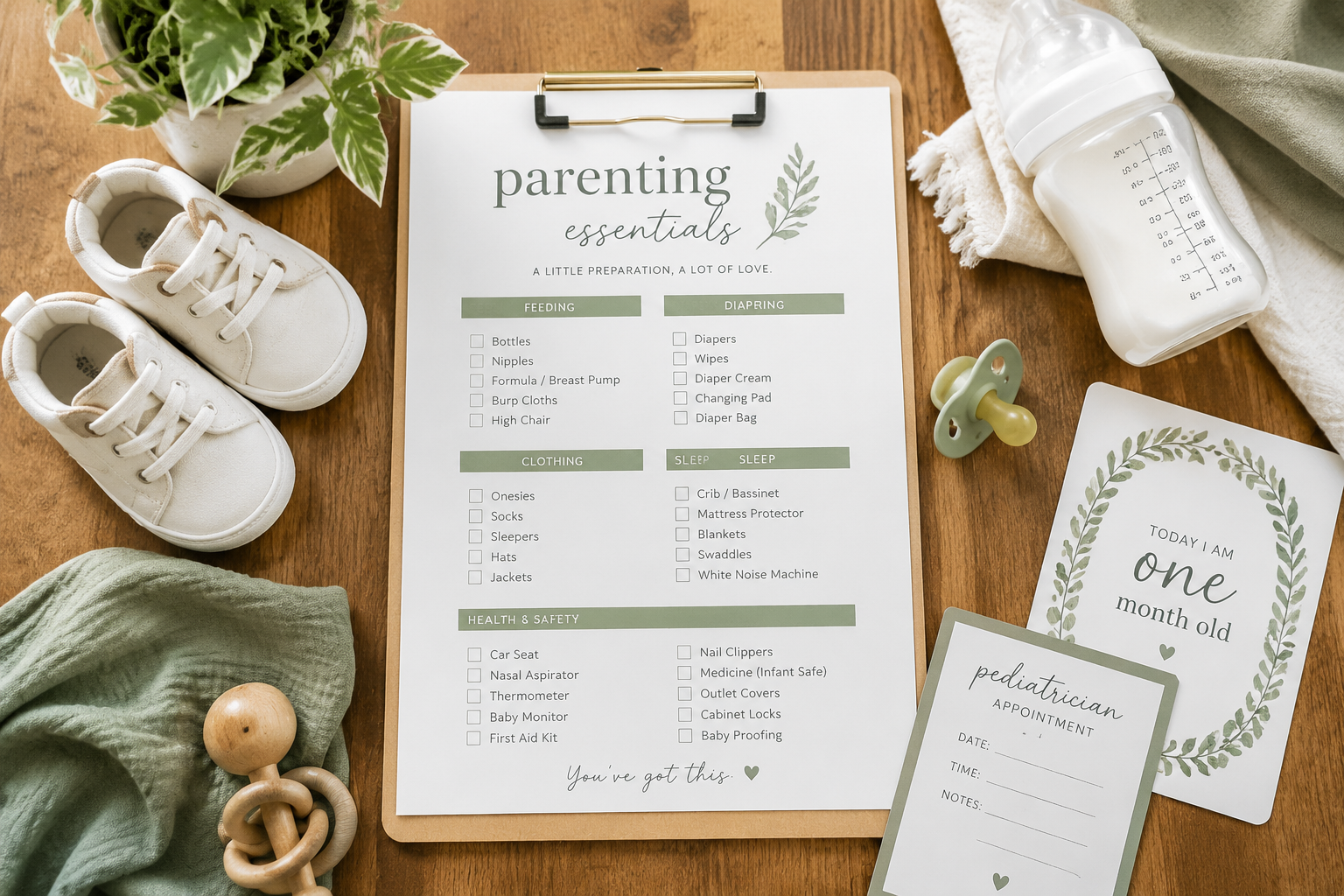
Before birth:
- Car seat installed and inspected
- Crib or bassinet set up with firm mattress
- Diapers (newborn and size 1) stocked
- Feeding supplies ready (bottles, formula if needed, nursing pads)
- Pediatrician selected and first appointment booked
- Birth plan written and shared with your care team
- Postpartum support plan in place (who’s helping in week one?)
After birth:
- Establish a rough feeding and diaper log for the first two weeks
- Schedule your 2-week pediatrician visit
- Set up a safe space for tummy time
- Identify a lactation consultant if breastfeeding
- Check in honestly about postpartum depression symptoms
Don’t let the to-do list become its own source of stress. Prioritize the safety items first and let the rest follow. You can also explore must-have baby-carrying products to help with hands-free parenting in the early weeks.
How Do You Take Care of Yourself While Caring for a Newborn?
Parental self-care isn’t selfish. It’s structural. You cannot consistently show up for a baby if you’re running on empty.
Postpartum depression affects a significant number of new parents, including fathers, and it’s treatable. If you feel persistently sad, disconnected, or anxious beyond the first two weeks, reach out to your doctor. It’s okay to not be okay. Early parenthood is genuinely hard, and asking for help is a sign of strength, not failure.
Practical self-care doesn’t require spa days. It means eating real meals, getting outside briefly each day, and maintaining some connection with your partner beyond logistics. Accept help when it’s offered. Let someone bring food, hold the baby, or fold laundry. Protecting your mental and physical health is one of the most important parenting responsibilities you have, because your child needs you well for years to come. For broader wellness strategies during this season, this guide to a healthier 2026 offers practical lifestyle tips that apply to new parents too.
How Do You Track Your Baby’s Growth and Developmental Milestones?
Tracking baby’s growth gives you peace of mind and helps you catch concerns early. But it can also become a source of unnecessary anxiety if you compare your child to others too rigidly.
Every child hits each milestone on their own timeline. Rolling, sitting, babbling, and walking all have typical ranges, not exact dates. Your pediatrician is your best resource for evaluating whether your baby is developing appropriately. Bring a list of questions to every visit, and don’t be shy about calling between appointments if something concerns you.
Listen to your gut. You know your baby better than anyone. If something feels off, trust that instinct and get it checked. That’s not paranoia; that’s good parenting. The parenting journey is full of moments where your own observation matters as much as any baby books or milestone chart.
Conclusion: Real Advice Comes Down to This
The best parenting advice for new parents isn’t complicated, but it does require commitment. Understand your parenting responsibilities without letting them crush you. Build a parenting philosophy with your partner before the chaos hits. Apply parenting discipline with consistency and warmth. And give yourself the same grace you’d give a close friend who’s figuring this out for the first time.
Your actionable next steps:
- Sit down with your partner this week and discuss three core values you want your parenting philosophy to reflect.
- Build your essential checklist and tackle the safety items first.
- Identify one person you can call on hard days, and actually call them.
- Book your pediatrician before the baby arrives if you haven’t already.
- Decide on your feeding approach and line up lactation support if needed.
Parenthood is the longest, most demanding, and most rewarding relationship of your life. You don’t have to be perfect at it. You just have to keep showing up.
Bullet Point Summary: Most Important Things to Remember
- Parenting responsibilities evolve. You don’t need to have it all figured out on day one.
- A shared parenting philosophy with your partner prevents conflict and builds consistency.
- Parenting discipline works best when it’s warm, consistent, and focused on teaching, not punishing.
- Breastfeeding is beneficial but not mandatory. Bottle-feeding nourishes your baby just as well.
- Sleep deprivation is real and temporary. Divide nighttime duties and accept help.
- Postpartum depression is common and treatable. Reach out early.
- Your pediatrician is your most important resource in the first year.
- Tracking milestones is helpful, but every baby develops at their own pace.
- Self-care is a parenting responsibility, not a luxury.
- This phase is temporary. The hard days pass. The good ones multiply.
FAQ
Q: What is the single best piece of advice for first-time parents? A: The best advice is to prioritize connection over perfection. Consistent love and presence matter more than doing everything by the book.
Q: How do I know if my newborn is getting enough milk? A: Count wet diapers (8–12 per day in week one) and monitor weight gain at pediatrician visits. If you’re concerned, contact a lactation consultant.
Q: When does sleep deprivation get better? A: Most parents notice improvement between 3–6 months as babies begin sleeping longer stretches. Every baby is different, but this phase is temporary.
Q: Is it okay to bottle-feed instead of breastfeed? A: Yes. Bottle-feeding, whether with breast milk or formula, fully nourishes your baby. The best feeding choice is the one that supports both your baby’s health and your mental wellbeing.
Q: How do new parents handle parenting discipline with a very young baby? A: Babies under 12 months don’t require traditional discipline. Focus on consistent routines, responding to cries promptly, and creating a safe, predictable environment.
Q: What are signs of postpartum depression I should watch for? A: Persistent sadness, inability to bond with your baby, extreme anxiety, or feeling detached for more than two weeks after birth. Contact your doctor promptly if these occur.
Q: How do my partner and I build a parenting philosophy together? A: Start by discussing your own upbringings, your core values, and how you each define discipline and emotional support. Revisit the conversation as your child grows.
Q: Should I follow a strict schedule with a newborn? A: A loose routine (feed, wake, sleep) helps, but rigid scheduling in the first weeks often creates stress. Follow your baby’s cues and build structure gradually.
Q: How much tummy time does a newborn need? A: Start with 2–3 short sessions per day (2–3 minutes each) and gradually increase as your baby builds strength. Always supervise tummy time.
Q: When should I call the pediatrician vs. wait and see? A: Call for fever in a newborn under 3 months, difficulty breathing, refusal to feed, or any sudden change in behavior. When in doubt, call. That’s what pediatricians are there for.
References
[1] 7 New Age Parenting Tips For The Modern Parent – https://cosmotogether.com/blogs/news/7-new-age-parenting-tips-for-the-modern-parent
[2] Top 10 Modern Parenting Issues And How To Address Them – https://www.skooc.com/top-10-modern-parenting-issues-and-how-to-address-them/
[3] Nine Steps to More Effective Parenting – https://kidshealth.org/en/parents/nine-steps.html
[4] Can Cope New Responsibilities Parent – https://adoption.org/can-cope-new-responsibilities-parent
[5] Positive Parenting Tips for Infants – https://www.cdc.gov/child-development/positive-parenting-tips/infants.html
[6] Positive Parenting – UC Davis Health – https://health.ucdavis.edu/children/patient-education/Positive-Parenting
Meta Title: Real Parenting Advice for First-Time Parents in 2026
Meta Description: Get real, practical parenting advice for new parents in 2026. Covers newborn care, breastfeeding, sleep deprivation, discipline, and building your parenting philosophy.
Tags: parenting advice for new parents, first-time parents, newborn care, parenting discipline, parenting philosophy, breastfeeding tips, sleep deprivation, parenting responsibilities, new moms, postpartum depression, baby milestones, early parenthood